Third Man

third man to use.jpg

Here’s something out of the ordinary – a refreshing, summery cocktail based on bourbon. And it has Nashville roots. Concocted by the bar manager at uber-trendy restaurant, Henrietta Red, and featured Garden & Gun magazine, this number has the surprising quality of being both rich and light and refreshing at the same time.

Most people associate the darker, heavier spirits with cool weather drinking. So do I, and that’s why this one is such a pleasant surprise. The rich flavor comes from the bourbon, but it is lifted into the summer sipping category by grapefruit, lemon, and the ever-bracing bitterness of Campari.
 
A complex, delicious combo with a gorgeous color. Perfect to sip at the end of a long, hot day. 
 
Who knew?

Third Man

  • 1½ oz. bourbon

  • 1 oz. grapefruit juice

  • ¾ oz. lemon juice

  • ¾ oz. Campari

  • ½ oz. simple syrup


Combine the ingredients, shake with ice until frigid, and strain into a rocks glass with another cube or two.
 
A word about grapefruit juice. Anybody who knows me, knows that I insist on fresh squeezed citrus in cocktails. With grapefruit I can make an exception. Fresh squeezed is best, but if you go to somewhere like Whole Foods or Trader Joe’s and buy a jug of organic, all-juice, no additives, not-from-concentrate, never-frozen stuff, it will be okay. 

The Goddess

goddess to use.jpg

My sister, Wesley Paine, who has been the Museum Director at the Parthenon for 42(!) years retired as of June 30. There have been parties and receptions in honor of this event and her service. For one of them, I was asked to come up with an appropriate cocktail. 

Et voilà! The Goddess.
 
It seemed appropriate to go for Greek ingredients, so I based it on metaxa, a Greek brandy, and retsina, a white wine flavored with pine resin. Retisina is considered by some the national drink of Greece, and by others as all-but-undrinkable. Either way, it works well in this cocktail. Rounding these out are lime juice – because every summer cocktail needs some citrus – and simple syrup to balance the retsina and lime. 
 
The result is a smooth sweet-sour flavor, similar to s Sidecar, but with a pine needle tang. Hard to describe, but pretty easy to drink.
 
Sip a few of these and you may start wearing a toga.
 
The Goddess

  • 2 ounces metaxa

  • 1 ounce retsina

  • .5 ounce lime juice

  • .5 ounce simple syrup

Shake with ice and strain into a cocktail glass. It’s also pretty good on the rocks.


Super 70

super 70 to use.jpg

Earlier this month, friends and relatives celebrated the 70th birthday of the estimable Kate Monaghan, my former real estate partner, current next door neighbor, and friend for life.
 
So, of course there had to be a special drink.
 
This is it. And it’s a doozy! It’s a variation on the Nifty Fifty (recipe on my web site), a drink I was asked to devise to help celebrate the 50th anniversary of Senior Citizens, a local non-profit that was rebranding itself as Fifty Forward. 
 
Both employ gin, citrus, and ginger, but the proportions are different. The Super 70 has Domaine de Canton ginger liqueur as the base sprit and adds lesser quantities of gin and lime juice. 
 
The result is absolutely delicious! And it’s a bit less alcoholic than some due to the lower proof of the ginger liqueur. Which means you can sip a bit more and enjoy the lovely flavor without getting loaded – or at least overloaded. 
 
Sip and celebrate the passing of the decades!
 
Super 70

  • Two parts Domaine de Canton

  • One part gin

  • One part lime juice – Need I say it? Must be fresh!

This one can be served straight up or on the rocks. It’s great either way.

Jack Rose

jack rose to use.jpg

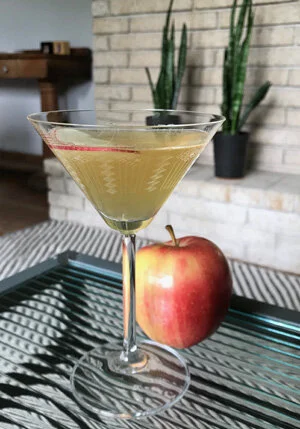
Here we go again – back to the vault of historic cocktails for an absolutely deluxe concoction dating back the early decades of the 20th century.

Documented Jack Rose mentions go back as far as 1905, and it has the booze-soaked literary cachet of being mentioned in Hemmingway’s The Sun Also Rises, and being a favorite of John Steinbeck. So history.
 
Plus, it’s perfect for springtime, with a refreshing sweet-sour flavor and a gorgeous deep rose color. So, why not.
 
It's based on applejack, an American apple brandy that used to be hard to find, but is readily available these days, and is not expensive. Where you will need to shell out a little, is the grenadine. Do NOT bother with Rose’s – the grocery store stuff, that’s little more than sugar water. At your favorite liquor merchant’s you will find real grenadine, made with real pomegranates, and imbued with real flavor. 

 
Shake up a bunch of these delights and sip your way to springtime nirvana.

Jack Rose

  • 2 oz Applejack – Laird’s is the brand you’ll likely find most often

  • 1 oz lemon juice or lime juice – try it both ways

  • .75 oz grenadine – only the real stuff

Shake until frigid and strain into a cocktail glass. Garnish with an apple slice if you garnish.

The Slope

slope 1 to use.jpg

As we continue to slog through the winter, I usually look for something hearty and robust – like a Manhattan. Variety being the spice of life, here’s good news for cocktail-focused drinkers everywhere: the basic Manhattan recipe lends itself to interesting variations – there are hundreds, if not thousands – and we’ve got an excellent example right here.
 
Not a classic – it was concocted in 2009 at the Clover Club, a bar in Brooklyn – but it drinks like one. Stout, boozy, and serious, but it goes down very smoothly. A nice balance between the whiskey and the sweet/bitter ingredients. 
 
I have Kristin and William, my totally deluxe daughter-in-law and son, to thank for first serving me this one. So nice to have creative, interesting, reasonably well-behaved children to hang-out with! Makes all the past parenting drama worth it! 
 
Mix up one of these delights and you won’t mind the cold!

The Slope

  • 2.5 oz rye

  • .75 oz sweet vermouth. (Best to use a stout one like Punt e Mes or Carpano Antica)

  • .25 oz apricot liqueur (I’m using Rothman & Winter because that’s what they stock at Midtown)

  • Dash of Angostura bitters

Because there are no cloudy ingredients here, I prefer to stir rather than shake. Get it good and cold and serve it straight up. And a brandied cherry wouldn’t hurt.

Fresh Start 46

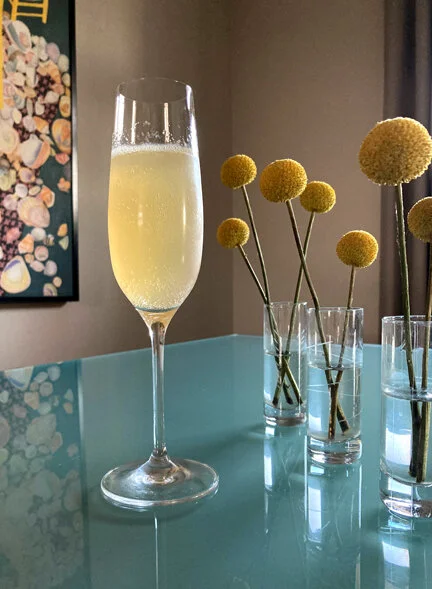
If you’ve been following along for more than a few months, you’ll know I am drawn to the timeless cocktail classics from the Golden Age of Drinking, the first three decades of the last century. But, now and then something new comes along that’s totally deluxe and I can’t help but love it.
 
That’s what we’ve got here! My friend and former client, Jim Vickers, came up with this delight in honor of our new president’s inauguration and named it Fresh Start 46. How appropriate!
 
It’s reminiscent of a French 75, but deeper, richer, and more complex with the addition of cognac and elderflower liqueur. It’s also fizzy and festive as all get-out. Delicious!
 
So, if you’re still celebrating – I am! – this beauty is just the ticket.

fresh start to use.jpg

Fresh Start 46

  • .5 oz. Gin

  • .5 oz. Cognac

  • .5 oz. Elderflower Liqueur (I’ve got St. Germaine on the shelf. Jim is using Fiorente.)

  • 1 oz. Meyer Lemon juice (if you don’t have a Meyer lemon handy, by all means squeeze a regular one!)

  • Bubbly (most any kind will do as long as it’s dry and very cold)

Combine the first four ingredients in a beaker, shake or stir to get icy cold, strain into a flute, and top with the bubbly.

David’s Holiday Gimlet

I don’t usually approve of messing with the venerable classics –  and the Gimlet is certainly one of those – but occasionally I run up on something that’s worth a try. My son and daughter-in-law alerted me to this one, which had come to them via Ina Garten. 


It calls for gin, lime, and simple syrup – the usual Gimlet ingredients – and adds the lush color, and dark, fruity flavor of pomegranate juice. 
 
My kids played with the proportions to make it less sweet – a good call – and I played with them some more to increase the gin-based tang, and viola, David’s Holiday Gimlet.
 
It’s like a regular Gimlet, but has more heft. Deeper, more complicated flavor. Perfect for cold weather and festive occasions like ringing in a new – and long-awaited – year. And it’s not as strong as some cocktails, so you can have more than one without spoiling your evening. 
 
Happy New Year to us all!
 
Holiday Gimlet

  • 2 ounces gin

  • 1 ounce fresh lime juice 

  • 1 ounce pomegranate juice 

  • .5 ounce simple syrup (or less to make it tangier)

  • Combine and shake to get freezing cold and serve straight up. If you want to crank up the party vibe, garnish with a lime slice.

holiday gimlet to use.jpg

Oriental

oriental.jpg

Moving into the winter months, I’m always on the lookout for drinks that are a little darker, a little heavier, less breezy than the summer coolers. Here’s yet another classic, based on rye, from the early decades of the 20th century that fills the bill. 
 
There’s nothing remotely Asian or “Oriental” about this drink, but who cares?
 
It first appears in Harry Craddock’s Savoy Cocktail Book published in 1930. According to Harry it was invented by an American engineer working in the Philippines who gave the recipe as a thank you to a local doctor who saved his life when he was dying of some tropical disease. Or something. Whatever.
 
The important thing is this – the Oriental is a really great cocktail. Dark, rich, and sweet-ish, but saved from being too sweet by the surprising addition of lime juice. Layers of flavor and very easy to sip on a chilly evening. Perfect for this time of year. 

The Oriental

  • 1.5 oz rye whiskey

  • .75 oz triple sec (I’m using Combier here)

  • .75 oz sweet vermouth

  • .75 oz lime juice

Combine the ingredients in a shaker and shake for 10 to 12 seconds (I count them) to get it frosty cold. Serve straight up. You may see recipes that call for an orange peel for garnish. I think lime looks better.

David’s Dark Daiquiri

dark daiquri to use.jpg

A disclosure right off the bat: The concept for this drink – if not the precise recipe – comes courtesy of my cousin Stephen, an excellent fellow who lives in Manhattan. He pulled me into an early Covid-era Zoom class conducted by one of his favorite NYC bartenders who was making dark rum drinks. But I played with the recipe a bit, so I claimed the name …
 
David’s Dark Daiquiri is a variation on the standard Daiquiri, a summer-perfect confection of white rum, lime, and white sugar syrup. Light, breezy, and to my taste, a little thin. Not where I’d turn on anything but a hot summer day.
 
This version steps things up and transforms the traditional Daiquiri into a rich, rounded, much deeper, cocktail that’s perfect for fall and winter. 
 
For the base spirit we substitute dark rum – specifically Diplomatico Reserva from Venezuela – for the white Bacardi. Instead of plain simple syrup, we use syrup made from raw sugar – turbinado in this case – which makes a brown syrup. And we bump up the lime juice a bit to keep it from getting too sweet.

The result is a rich, mahogany concoction, bursting with flavor. It warms rather than cools – the opposite of a traditional Daiquiri. 
 
Absolutely wonderful! And very easy to sip on a chilly evening.
 
David's Dark Daiquiri

  • 2 ounces dark rum* 

  • 1 ounce raw sugar syrup**

  • 1.25 ounces lime juice (you can adjust this to taste)


* Diplomatico Reserva is totally deluxe, but why not sip your way up and down the dark rum aisle. You may find something you like even better. If you do, by all means tell me about it!
 
** Using turbinado or demarrera raw (not brown) sugar, make the syrup the same way you do simple syrup. Bring equal parts sugar and water to a boil, dissolve, and cool. Done!  

Boulevardier

Fall weather fabulousness!

boulevardier.jpg

Here’s yet another beauty from the vault of ancient cocktails. Devised in Paris in the 1920s and attributed to American expat, Erskine Gwynne, a member of the Vanderbilt clan who founded a monthly magazine in Paris called
Boulevardier
 
This might be considered a bourbon-based Negroni or maybe a jazzed up Manhattan. And while I love Negronis and Manhattans on occasion, I love this one even more! It’s a deeper, richer, more layered flavor. Slightly peppery and almost mysterious. 
 
Delicious and absolutely perfect for fall weather. Also really strong so, sip judiciously, and enjoy the crisp evening …
 
Boulevardier

  • 1.5 ounce bourbon (try it with rye as well)

  • 1 ounce Campari

  • 1 ounce sweet vermouth

This has only clear ingredients so I like to stir rather than shake, but it’s your choice as long as you get it icy cold. Strain into a short glass with more ice – I like one big cube – and enjoy slowly.

Eddie Haskell

eddie haskell to use.jpg

Pretty cheeky, but always nice ...

This month, we proudly present another liquid delight made up by me. As usual, a few words of introduction are in order.
 
Many of you know I’m not a fan of vodka as a cocktail ingredient. While it can be lovely to sip by itself, vodka brings nothing to a cocktail party besides alcohol. No flavor, no color, just alcohol. Which results in alcoholic, yet watery-tasting, drinks. Not the best thing.
 
But I am a fan of flavored vodkas. (That’s what gin is, BTW. Neutral spirits flavored with juniper and other botanical ingredients.) One of my favorite brands of flavored vodka is Deep Eddy out of Austin, Texas. 
 
Deep Eddy makes several flavors, all good. An Eddie Haskell employs the grapefruit variety, along with gin (the best flavored vodka ever invented!) and lime juice. Gin and citrus is always an inspired combination and here you get two hits of citrus – grapefruit and lime.
 
The result is a bit tart, very tangy, and totally refreshing. It feels almost like bubbly on the tongue. Ward and June would have loved these! 
 
As summer begins to loosen its grip, I guarantee Eddie Haskell will ease you through the last of the hot afternoons. Who knew Eddie was really a nice guy ...

Eddie Haskell

  • 2 parts Deep Eddy Grapefruit Vodka

  • 1 part gin

  • 1 part lime juice 

 Combine all the ingredients and shake ‘til it’s good and cold, and serve it straight up.

Juillet

juillet.jpg

Okay, folks. Summer has landed here in Music City. With both feet. After a lovely spring and a slow start to summer, we have finally hit the days of 90+ temps and 90+ humidity. Feh!
 
So what to do? Drink like the French.

 The French know how to live – the food, the fashion, the attitude, are all delicious – even in hot weather. And their drinks go way beyond good wine. Thus, this month’s cocktail, the Juillet (French for July – get it?) I got from a wonderful book, Aperitif by Rebekah Peppler. 
 
Gently alcoholic, the Juillet is soft, semi-sweet, and subtle. And, as with all things French, complex. The base – sweet and dry vermouth with a touch of St. Germain – combines with a splash of bubbly to create a multi-layered flavor that goes down oh-so-smoothly. Perfect for a hot afternoon, wishing you were somewhere other than Nashville – like at a café in Provence.

Juillet

  • 1 ounce dry vermouth

  • 1 ounce sweet vermouth

  • .25 ounce St. Germain elderflower liqueur

  • 1 ounce dry sparkling wine – or perhaps a bit more

Combine the first three ingredients in a mixing glass with ice and stir to get very, very cold. Strain into a cocktail glass – a coupe is ideal – and top with the bubbly. Toss in a lemon peel to make it pretty.
 
Sip and travel to France in a daydream! 

1928 Sea Breeze

sea breeze to use.jpg

Among those who debate cocktail origins, debate swirls around the Sea Breeze. General consensus dates the typical version to the 1970s or 80s. That’s fine with me, and not terribly relevant to this discussion, because this is not the typical version. It’s much better.
 
The typical Sea Breeze is made with vodka, cranberry, and grapefruit. If you’ve been reading my emails or watching my Facebook videos, you already know I disapprove of vodka in cocktails. It adds alcohol but not flavor – resulting in hot, but watery drinks. And I’m just about over cranberry juice. Hear me Sex and the City ladies?
 
This version was concocted by a Brooklyn bar owner named David Moo, and it’s just about perfect. Made with gin (of course) instead of vodka and grenadine (has to be real grenadine) instead of cranberry.
 
The result is a full-flavored, slightly sweet, oh-so-refreshing summertime sipper. Just in time for summer! 
                                                   
You will love these!

1928 Sea Breeze

  • 2 ounces gin

  • .25 ounce grenadine. I'm using Jack Rudy, but anything that isn't Rose's will be fine.

  • 3 ounces grapfruit juice. It ought to be fresh squeezed, but I will give you a pass if you get a high-end, nothing-but-juice bottled version.

Fill – all the way to the top – a tall glass with ice, add the ingredients, stir long enough to get it very cold, and drink it. 

Montparnasse

montparnasse to use.jpg

This gem – named for the left-bank neighborhood in Paris renowned as an avant-garde hot spot in the early 20th century – may or may not be a timeless classic. I don’t much care. It’s wonderful and that’s the whole point. This recipe comes from the redoubtable David Lebovitz, witty writer, food and drink expert, Francophile, and all-round bon vivant. And who could ask for a better reference?
 
It’s based on Calvados – apple brandy – and the whole thing has a crisp, slightly tart, apple-ish flavor that’s unusual and very refreshing. Perfect for a sip outdoors, at least six feet from the next person, enjoying a balmy evening.
 
Give this one a try. Pretend the current clouds have passed and you’re sitting in a left bank café. Or in Normandy. Or Provence. Or …

Montparnasse

  • 1.5 oz Calvados (I use Daron)

  • .75 oz St. Germain elderflower liqueur

  • .5 oz lemon juice – fresh of course

  • .5 oz dry white wine

Combine the ingredients in a shaker, get it good and cold, and strain into your favorite cocktail glass. For those who garnish, a paper-thin slice of apple looks wonderful. 

A word about ingredients
Lebovitz says you can ramp-up the apple flavor by using apple juice or cider instead of the white wine. I haven’t tried this because I like the degree of apple-ness just fine as-is and I’d suggest trying it this way before going deeper into the apple.
 
Also this: I’m aware that while I have a bottle of calvados on the shelf, relatively few others do. Not to worry. It’s not terribly expensive, you can substitute American applejack (usually cheaper) to no ill effect, and Drizly.com delivers.  Same day! Huzzah!

Old Fashioned

old fashioned.jpg

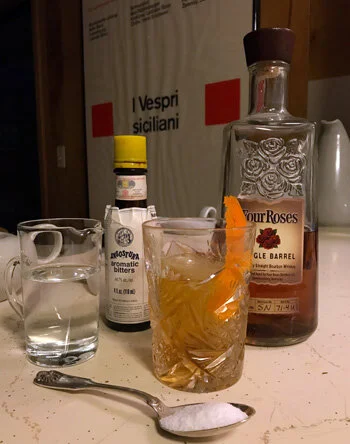
When things get stressy, and they certainly are in these covid-19 days, something simple, direct, and effective seems to be in order. And that’s the Old Fashioned to a tee. Think of it as comfort food in cocktail form.

It’s nothing more than a slug of whiskey with sugar and bitters. Basic. Yet it tastes delicious and sophisticated, and perhaps that’s why it has remained popular with tipplers from the early days of the nineteenth century up to the present moment. That’s 200 years of happy drinking. Can’t argue with that!
 
So, a couple of pointers. Always use good bourbon. The kind you’d sip neat or on the rocks. Middle grade spirits are fine in drinks that combine lots of flavors, but in an Old Fashioned the whiskey is the star (like the gin in a Martini), so make it the good stuff. 
 
Then there’s the sugar. There are two views on this subject: simple syrup or muddled sugar.  Simple syrup is quicker and easier, and really tastes the same, but the classic version uses a sugar cube or loose sugar and water muddled with the bitters. Suit yourself, but why not try the classic version first and go from there

Old Fashioned

  • Half teaspoon sugar, or one sugar cube 

  • 1 teaspoon water

  • 3 dashes Angostura bitters

  • 2 ounces bourbon

Put the sugar, water (or a teaspoon of simple syrup), and bitters into a rocks glass, and stir until sugar is nearly dissolved. Fill the glass with large ice cubes, add the bourbon, and stir gently to combine the flavors and get it good and cold.
 

Orange peel for garnish. Twist to express the oil before dropping it in.

Leatherneck

leatherneck to use.jpg

Okay folks, I’ve got another one from the vault of historic cocktails, and it’s just in time for St. Patrick’s Day – which, by the time you read this, will be only a few weeks away.
 
The Leatherneck is an excellent drink, but I present it to you now because it’s also … green! A lovely emerald green. So much nicer than the cheap beer with green food coloring served at watering holes that cater to frat boys. The color and flavor magic are the result of mixing whiskey with the delightfully odd, but always colorful and tasty, blue curaçao. It’s almost like magic!
 
As for the flavor, well, it’s interesting. But also good. Light notes of lime and orange combined with a surprisingly earthy base note from the whiskey. Give it a try – if only in honor of St. Pat. You might find yourself wearing a derby and leading a parade.

Leatherneck

  • 2 ounces blended whiskey*

  • .75 ounce blue curaçao* 

  • .5 ounce lime juice – fresh of course

Shake with ice and serve straight up. Garnish with a lime wheel if you’d like.

* About those ingredients: Blended whiskey (Canadian Club or Seagram’s 7) isn’t very good for sipping, or for much of anything else really, so this cocktail may be the only reason to buy a bottle. Fortunately, it’s cheap. On the other hand, blue curacao, while also cheap, is good for all sorts of things. Tiki drinks, for example, and the always-delicious Kamikaze. 

Barbara West

barbara west to use.jpg

This one’s origins are a bit obscure – probably dating to the 1930s, though no one seems certain – and it may, or may not, be named for the Barbara West who boarded the Titanic as a 10-month-old, survived the disaster, and lived until 2007, becoming the next to last survivor to pass on. It might as well be for her. Why not?
 
And really, who cares? This is a great drink! An unusual mixture of dry sherry and gin with the added kick of lemon, this one starts out a little sour on the tongue, but broadens out as it goes down. It ends on a rich, full-flavored note that’s hard to describe, though “bracing” works fairly well. Great for a pick-me-up on a drab winter day!
 
Dumb name. Excellent drink. Rush out today, grab a bottle of sherry, and try this one!

Barbara West

  • 2 ounces gin

  • 1 ounce dry sherry* 

  • .5 ounce lemon juice

  • Small dash Angostura bitters


* You can use any sherry you wish, but this drink is best if the sherry is dry. Amontillado is a good choice, but I’ve used Taylor Dry Sherry (found on or near the bottom shelf) and it works just fine.

David's Manhattan Plus

manhattan plus to use.jpg

Here’s a variation on that rock-solid classic, the Manhattan, a perfect cold-weather quaff if ever there was one. 
 
I’ve said many times in this space that I love the classics from the golden age of drinking and I generally don’t like to mess with them. But sometimes a traditional Manhattan, with all that sweet vermouth, is just a little too sweet, and many of my drinking friends and I prefer something a bit drier. 
 
Enter Byrrh Quinquina. This oddly named aperitif is a French concoction from the 19th century (like so many classic aperitifs) and it contains hints of quinine. It had been absent from the American market for many years until recently, and we welcome it back!
 
That’s really all you need to know except that it’s sort of vermouth-like, but not as sweet. So the cocktail is drier than the traditional recipe, but it still tastes like a Manhattan.
 
So if you like it stout, but not too sweet, try this beauty. My gift to you.

David's Manhattan Plus

  • Two parts rye (NOT bourbon, too sweet)

  • One part Byrrh Quinquina (Midtown has it. Frugal's, too.)

  • One dash bitters. (I’ve been using Dale DeGroff’s pimento bitters because they add a spicy kick, but the choice is yours. Try all sorts.)

Shake over ice and strain into a rocks glass with fresh ice. A stem-on brandied cherry is nice, but not necessary.

Satan’s Whiskers

satans whiskers to use.jpg

Here’s another delight from the golden age of the early 20th Century, when drinks were strong, drinking was considered a creative pursuit – like a hobby – and drinks were named accordingly. And with a name like this, how could you not feel tempted?
 
It’s one of a great many variations on the ancient classic, the Bronx, in that it employs gin, vermouth and orange juice. But it uses them in equal amounts and adds orange curaçao and orange bitters, for a more balanced, less edgy flavor. 
 
Watch out though, a Stan’s Whiskers is plenty strong.

Think of it as diabolical orange juice. (Not recommended for breakfast!)

Satan's Whiskers

  • .75 ounce gin

  • .75 sweet vermouth

  • .75 ounce dry vermouth

  • .75 orange curaçao

  • .75 orange juice (fresh of course!)

  • 2 dashes orange bitters

Combine all the ingredients and shake ‘til it’s good and cold. Strain into a cocktail glass, and garnish with an orange slice.

Derby

derby to use.jpg

There was a vibe in the first decades of the 20th century that generated some really outstanding drinks. What a hearty and hardy bunch those long-ago boozers were. We owe them a great debt!
 
So, here we go again with another of the old-time classics.
 
As we move – finally!– into cooler weather, we here at davidpainerealtor.com naturally begin to think of the more robust flavors brought to you by whiskey-based drinks. Think Manhattan and Rob Roy. 
 
Based on bourbon and sweet vermouth, the Derby certainly works those flavors, but adds orange curacao and fresh lime on top. Those two – especially the lime – add a kick that’s unexpected and really delicious. If a Manhattan is a little too sweet/heavy for you, a Derby will really ring your bell!
 
Mix up a few of these and you’ll be off to the races in no time flat! 

The Derby

  • 1 oz bourbon

  • .5 oz sweet vermouth

  • .5 oz orange curaçao (plain old triple sec will do fine as well)

  • .75 oz fresh lime juice

Shake until your fingers freeze, and serve straight up. A lime peel for garnish doesn’t change the flavor, but it looks really nice.