
I’m scrambling as I write this.
Somehow this year, amid the clutter of life in general and of business in particular, I missed the fact that April only has 30 days, and that today is the last of those 30. My monthly message usually goes out on the last, or nearly the last, day of each month. But as a rule, I put it together the day before, and set it up to go out at 5:30 the following morning. Today, I’m doing the whole thing – writing, designing, and sending – on the same day.
In the nick of time, as they say. Which gets me thinking about time, and timing, and of course, real estate.
Time – or clock time, as Eckhart Tolle describes in The Power of Now – governs almost everything we do in real estate. And yet, clock time is really just an artificial construct that helps us navigate life and get through each day. In a more universal sense, clock time doesn’t exist. “Time” is now. The present moment is all we have. The past is gone and the future hasn’t arrived yet.
Time in both senses – clock time, and “now” time – are present and affect our real estate dealings. Clock time helps us plan, do business in cooperation with others, mark progress toward a goal, and a host of other useful things. But our lives often unfold and make sense within a different concept of time.
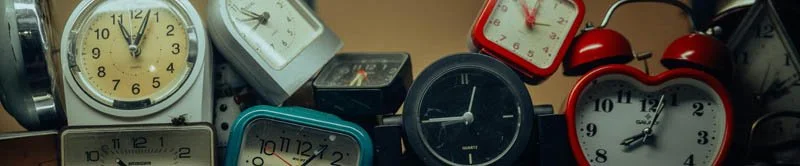
All of our official real estate activities are governed by clock time. Our agreements – listing and buyer rep agreements, purchase and sale agreements, inspection periods, closing dates – are time-limited. They have start dates and expiration dates.
This business couldn’t function without dates and deadlines. Would an inspection ever get done without an inspection deadline? Could we ever close a sale if there weren’t a closing date specified in the contract? The inspection deadline or the closing date might change during the process, but the original date specified in the contract puts down a marker to work toward. It keeps both sides on track and focused on getting things done.
However, the less concrete, more universal sense of “now” time, plays a big role, as well. We live in the now. Moment by moment. Planning for the future and remembering the past are vital to our sanity, but the present moment is really all we have.
So, we look at how we are living now. Am I happy with my house? Does it meet my needs now? It might have met your needs years ago, or even days ago, but it does no longer. It might, or might not, meet my needs at some point in the future, but now it works. Or doesn’t work.
The understanding that the past is gone – and what’s gone includes how much you paid for the property – enables a clearer look at the present. Likewise, understanding that the future isn’t here yet – and may never get here, at least not in the form we imagine it – allows a more clear-eyed look at the present.
And we come back to the often-asked questions: “Is this a good time to buy a house? Is this a good time to sell?” The answer always must start with “now” and then look to the past and the present for context and nuance.